

Legacy Manufacturing Equipment Support | Obsolete Parts Cross-Reference
Legacy Installations & Equipment Upgrades
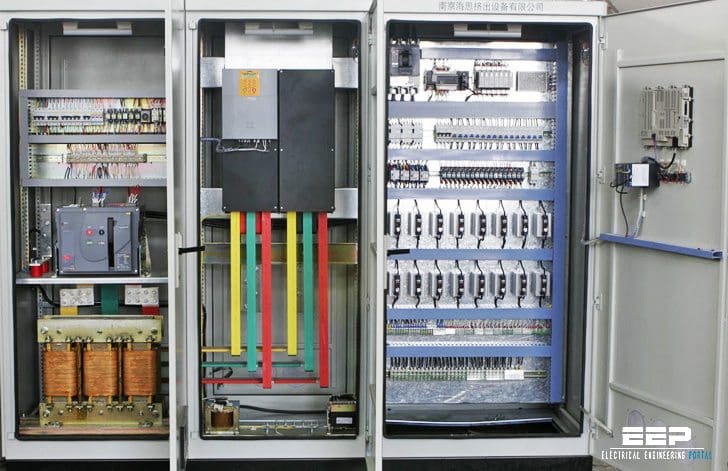





The Equipment That Lasts Forever
Installed in 1987, fully depreciated, mechanically sound, and always reliable. The problem: the control panel uses a discontinued Allen Bradley PLC 5, the operator interface is a pushbutton station and motor start contactors are worn they occasionally weld close. Billions of dollars of perfectly functional mechanical equipment supported by ageing electrical systems.
Machines aren’t obsolete — the controls are.
Industrial control manufacturers typically support products for 10-15 years after introduction, then phase out.
- Legacy platforms: Allen-Bradley PLC-5/SLC-500, GE Fanuc 90-30, Siemens S5/S7-300
- Replacement strategy: Modern PLCs with legacy I/O compatibility minimize rewiring
- Interim solution: Communication gateways allow data extraction without PLC replacement
- Obsolescence driven by Windows OS end-of-life and display panel technology changes
- Replacement strategy: Modern touchscreens with protocol converters maintain
- PLC compatibility Interim solution: USB keyboard/monitor adapters extend life of non-touch interfaces
- Mechanical reliability often outlasts electrical availability
- Replacement strategy: Cross-reference to modern equivalent with same electrical ratings and mounting
- Interim solution: Overhaul/rebuild services available for many legacy contactors
- Technology improvements drive obsolescence (efficiency, communication, features)
- Replacement strategy: Modern VFD with legacy motor compatibility (voltage/frequency ratings)
- Interim solution: Repair services available, but board-level component obsolescence eventually limits repairs
- Safety standards evolve (Category 3 to 4, PLd to PLe), driving product changes
- Replacement strategy: Modern safety relays with backward-compatible inputs
- Critical: Safety system upgrades require risk assessment and validation per ANSI B11 standards
When options are limited, we step in.
- Component Sourcing Strategies
- OEM new stock: First choice if available (rare for 15+ year old equipment)
- Authorized distributor inventory: We maintain stock of high-demand legacy components
- Manufacturer refurbished: Factory-tested used parts with warranty (often available through OEM repair channels)
- Third-party refurbished: Independent repair houses specialize in obsolete controls
- NOS (New Old Stock): Unused parts from discontinued inventory (variable quality/authenticity)
- Salvage/used parts: Last resort for truly obsolete items (no warranty, unknown history)
- Cross-Referencing Alternatives
- Same electrical ratings (voltage, current, coil voltage)
- Identical or compatible mounting (DIN rail, panel mount, plug-in base)
- Equivalent or better performance (switching capacity, cycle life)
- HMI/Operator Interface Upgrades
- Replace obsolete pushbutton stations with modern touchscreen HMIs
- Maintain existing PLC and I/O (avoid software rewrite)
- Improve operator visibility with color graphics, alarm history, recipe management
- Add data logging and remote access capability
- Communication & Connectivity Retrofits
- Add Ethernet modules to legacy PLCs (enables SCADA integration without PLC replacement)
- Install protocol gateways (Modbus RTU to Ethernet/IP, Profibus to OPC-UA)
- Wireless adapters for remote equipment monitoring
- VPN routers for secure vendor support access
- Safety System Modernization
- Upgrade mechanical limit switches to modern safety-rated types
- Replace obsolete safety relays with current standards-compliant modules
- Add safety light curtains where guards were removed/compromised
- Implement lockout/tagout interlocks and guard position monitoring
- Motor Control Upgrades
- Replace worn contactors and overload relays with modern equivalents
- Add VFDs to constant-speed motors (energy savings and soft-start benefits)
- Install power monitors and current sensors (enable predictive maintenance)
- Upgrade to electronic overload relays (better protection, adjustable settings)rs:
- When Full Replacement Makes Sense:
- Multiple obsolete components, frequent failures creating downtime
- Safety system doesn’t meet current standards (OSHA exposure)
- Control system capacity insufficient for required functionality
- OEM no longer supports machine or can’t provide parts/documentation
- Business case justifies investment based on improved productivity/uptime
- Full Replacement Scope:
- New PLC or PAC (programmable automation controller)
- Modern HMI/touchscreen with enhanced graphics and diagnostics
- Updated motor starters, contactors, VFDs, safety relays
- New sensors (proximity, photoelectric, pressure, temperature)
- Structured wiring with proper labeling and documentation
- Safety system upgrade to current standards (light curtains, interlocks, E-stops)
- Commissioning and operator training
- Critical Success Factors:
- Thorough documentation of existing machine operation (before removing old controls)
- Maintain mechanical integrity (don’t create new problems while fixing electrical)
- Staged installation minimizes downtime (build new panel offline, quick cutover)
- Operator input ensures usability of new interface
- Pnemmon Control Types:
- Relay logic control panels (no PLC, pure relay ladder)
- Early PLCs (AB PLC-2, PLC-5, GE Fanuc 90-30)
- Pneumatic/hydraulic sequencing with electrical interlocks
- Typical Failure Points:
- Mechanical relays: Contact erosion after hundreds of thousands of cycles
- Control transformers: Thermal degradation, insulation breakdown
- Pressure switches: Mechanical wear, calibration drift
- Solenoid valves: Coil burnout, spool sticking, seal leaks
- Wiring deterioration: Oil contamination, heat damage, vibration fatigue
- Retrofit Solutions:
- Relay panel conversion to PLC control (maintain hydraulic system)
- Modern pressure transmitters replace mechanical switches (better accuracy, diagnostics)
- Solenoid valve upgrades with position feedback and flow monitoring
- Safety system upgrades (two-hand controls, light curtains, interlocks per ANSI B11.2)
- Common Control Platforms:
- Fanuc 0M, 0T, 15M, 16M, 18M series
- Siemens 840D, 810D
- Heidenhain TNC controls
- Mitsubishi M-series
- Typical Failure Points:
- Battery backup failures: Program loss when batteries expire (typically 3-5 year life)
- Servo drive capacitor aging: Bulk capacitors in servo amplifiers degrade over 15-20 years
- Encoder failures: Mechanical wear, contamination, cable damage
- Spindle drive issues: Power modules, cooling fans, sensor failures
- CRT display failures: Original displays use obsolete CRT tubes (LCD retrofit available)
- Retrofit Solutions:
- Battery replacement on scheduled basis (preventive, not reactive)
- Servo drive capacitor replacement or drive module upgrade
- Encoder replacement with modern equivalents (may require scaling adjustments)
- LCD display retrofits for machines with CRT operator panels
- Communication upgrades for DNC (distributed numerical control) integration
- Common Control Platforms:
- Distributed motor control (contactors/starters at each drive location)
- Central PLC with remote I/O drops
- DeviceNet or other fieldbus networks (many now obsolete)
- Typical Failure Points:
- Motor starter contactors: Wear from frequent starts/stops
- Photoelectric sensors: Lens contamination, LED aging, obsolete models
- Limit switches: Mechanical wear, environmental damage
- Encoder failures: Speed monitoring and positioning feedback devices
- Network communication: Obsolete fieldbus hardware and protocol converters
- Retrofit Solutions:
- Wireless sensors reduce wiring complexity (battery-powered, mesh networks)
- Modern Ethernet-based communication replaces obsolete fieldbus
- VFD retrofits on constant-speed conveyors (soft-start, speed adjustment, energy savings)
- Safety upgrades (guarding improvements, E-stop optimization, interlock validation)
- Common Control Platforms:
- Allen-Bradley PLC-5, SLC-500, ControlLogix (early versions)
- Siemens S5, S7-300 (original hardware)
- Proprietary OEM controls (often built on commercial PLC platforms)
- Typical Failure Points:
- Vision system obsolescence: Cameras, frame grabbers, legacy software won’t run on modern PCs
- Servo drive aging: High-speed applications stress power electronics (capacitor aging)
- HMI obsolescence: Windows XP/CE-based operator interfaces no longer supported
- Sensor failures: Photoelectric, proximity, vision, ultrasonic (high cycle counts)
- Network switches: Early Ethernet switches without modern security/management features
- Retrofit Solutions:
- Vision system upgrades (modern cameras with GigE, smart cameras with integrated processing)
- Servo drive replacement with modern equivalent (same motor compatibility)
- HMI replacement with backward-compatible PLC communication
- Sensor upgrades to IO-Link devices (better diagnostics, remote configuration)
- Industrial Ethernet switch upgrades (managed, VLANs, cybersecurity features)
Serving Legacy Equipment & Machinery Since 1957
Ready to Build, Upgrade, or Replace?
We help engineers, contractors, and buyers navigate procurement with responsive quoting, legacy cross-referencing, and access to hard-to-source components from trusted suppliers.